Feature: Three things we learned at Open Banking Expo Canada 2025
At Open Banking Expo Canada on June 17, speakers from across the Open Banking, Open Finance and payments ecosystem convened to discuss a range of topics, including implementation and interoperability, the economic potential of Open Data, and real-time payments.
So, what were the key themes that emerged from across the sessions?
Innovation in payments is ‘underway’
“Innovation isn’t waiting, and Canada isn’t waiting” for the “promise” of Real-Time Rail and Open Banking, Val Kugathasan, head of innovation and digital at ADP, told delegates at Open Banking Expo Canada.
“Across the ecosystem, organizations are leveraging today’s rails and frameworks to solve real problems, unlock new value, and they’re doing that right now. That innovation is underway,” Kugathasan added.
In its most recent update, Payments Canada said that the build of Real-Time Rail is on course for completion in the third quarter of 2025, and is expected to launch once testing has concluded in 2025 and 2026.
Kugathasan was speaking on a Powerhouse Debate, ‘Modernizing payments: Leveraging existing payment methods for new capabilities’, alongside Vlad Cazan, chief technology officer at Paybilt.
Delegates heard how real-time payments and Open Banking have “reshaped” the landscape in the UK, Brazil and Singapore, with Cazan pointing to “faster money movement and secure access to financial data” as having driven innovation abroad.
Cazan highlighted payroll as a key use case in Canada: “For employers, it means faster onboarding, more flexibility on how services like payroll are delivered, and payment advances.
“So, real-time rails and Open Data don’t just speed things up. They reduce friction, they improve cash flow, and they make financial services more responsive. Payroll is just one of the use cases, but it’s a clear example of how these tools can be used to solve real problems today,” said Cazan.
In a Fireside Chat on the Open Finance Stage, moderated by Shruti Awasthi, director, Open Banking strategy at CIBC, speakers discussed Pay by Bank and its future in Canada.
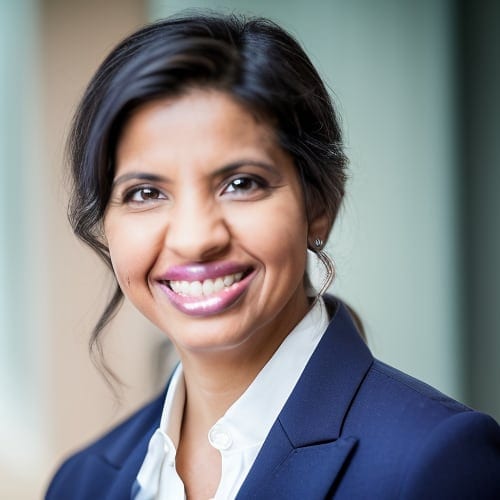
Bhavna Kaushal
Bhavna Kaushal, principal consultant at BK Advisory, began with a definition of Pay by Bank as “account-to-account payments… where you’re able to transfer money directly from your bank account, either to a merchant or for a bill payment, or to the government for taxes, or even for that matter, for P2P transactions – and you’re doing that without using traditional card rails”.
She cited India and Brazil, respectively, as examples of countries which adopted Pay by Bank, prior to implementing Open Banking.
Karen Budahazy, an Open Finance Network of Canada board member, told delegates “there are a number of steps before we can get what I call true, frictionless pay-by-bank” in Canada.
“We need Open Banking to be here, and we need the Real-Time Rail, or RTR, to be in place,” she said.
Awasthi added: “When you think about Pay by Bank, we’re not only thinking about consumers and the value for consumers, we are also thinking about value for SMBs – we are thinking value for sole proprietors, for merchants.”
Canadian consumers want security, not Open Banking
Consumer awareness of Open Banking is often talked about as a barrier to further adoption. How much consumers need to know or understand about Open Banking has long been debated.
In her presentation ‘Understanding Canadian consumers: Insights on Open Banking adoption’, Bernice Cheung, vice president, financial services and cultural markets research at Environics Research, revealed that she never uses the term “Open Banking” on any consumer-facing surveys.
“There’s a significant number of Canadians (23%) who don’t know whether or not they’d authorize sharing transaction history between two major banks, and that’s because they’re cognitively and emotionally overloaded, they can’t even make that decision. So we need to simplify the language and not even mention ‘Open Banking’, just talk to them about the benefit to them,” said Cheung.

Brian Harris, CEO, Beem Credit Union
Speaking on a panel debate about ‘The importance of Open Data in driving Canada’s economic growth’, Brian Harris, chief executive officer of Beem Credit Union, told delegates: “No one wakes up asking for Open Data, Open Finance, Open Banking.”
He added: “What they want is trust and security, and then they want solutions that solve their business problems or solve their personal problems… whatever it might be.”
This sentiment was echoed by John Pitts, head of industry relations and digital trust at Plaid, later in the day, during a Fireside Chat with Sunny Soin, director payments, money movement, Open Banking, digital money management at Tangerine.
“If you survey Canadian consumers, do you want Open Banking? That’s an abstract concept. It is not a problem that a consumer experiences in their life,” said Pitts.
Soin added: “Canadians are looking for two things: Simplicity and security.”
Small businesses stand to gain from an Open Data economy
During a panel discussion about ‘The importance of Open Data in driving Canada’s economis growth’, moderator Michelle Beyo, founder and chief executive officer of Finavator, suggested that the term “consumer-driven banking” often used in Canada, can exclude SMEs from the conversation. She called on the ecosystem to “think bigger” and to not be “pigeonholed” by the name.
Beyo, who is also president of the Open Finance Network of Canada, added: “At the Open Finance Network, we actually did a report on who we thought would be the biggest benefactor from an Open Finance network, and it was SMEs. They make up 98% of most anyone’s economy, especially the Canadian economy.”

Michelle Beyo, founder and CEO, Finavator
Brian Harris, chief executive officer of Beem Credit Union, told Beyo: “I think small businesses, for us anyhow, I think is one of the most critical areas.
“If there’s anyone that we need to ensure is getting every opportunity for productivity, efficiency, and growth, it’s small businesses.”
Mike Cascone, vice president of government experience Americas at Xero, led a Fireside Chat where he was joined on the Open Finance Stage by small business owners and an accountant to hear first-hand about their pain points. The speakers considered how the rollout of Open Banking could directly address some of these challenges.
Cascone acknowledged that the “public narrative” is “very focused on the consumer and consumer benefits, but small businesses arguably have much more significant upside for the broader economy”.
Conclusion – it’s about collaboration
In one of the final presentations of the day, Carrie Forbes, founder and chief executive officer of Rockstar Advisory, identified “collaboration” as the common thread, calling it “critical” to both Open Banking and transformation.
“If we’re really going to make an ecosystem work, we do need to actually collaborate across organizations and in a different way than we have ever seen before,” she said.
“The future for success is going to be organizations that master collaboration.”
Further reading: The shifting tides of Open Banking in North America